

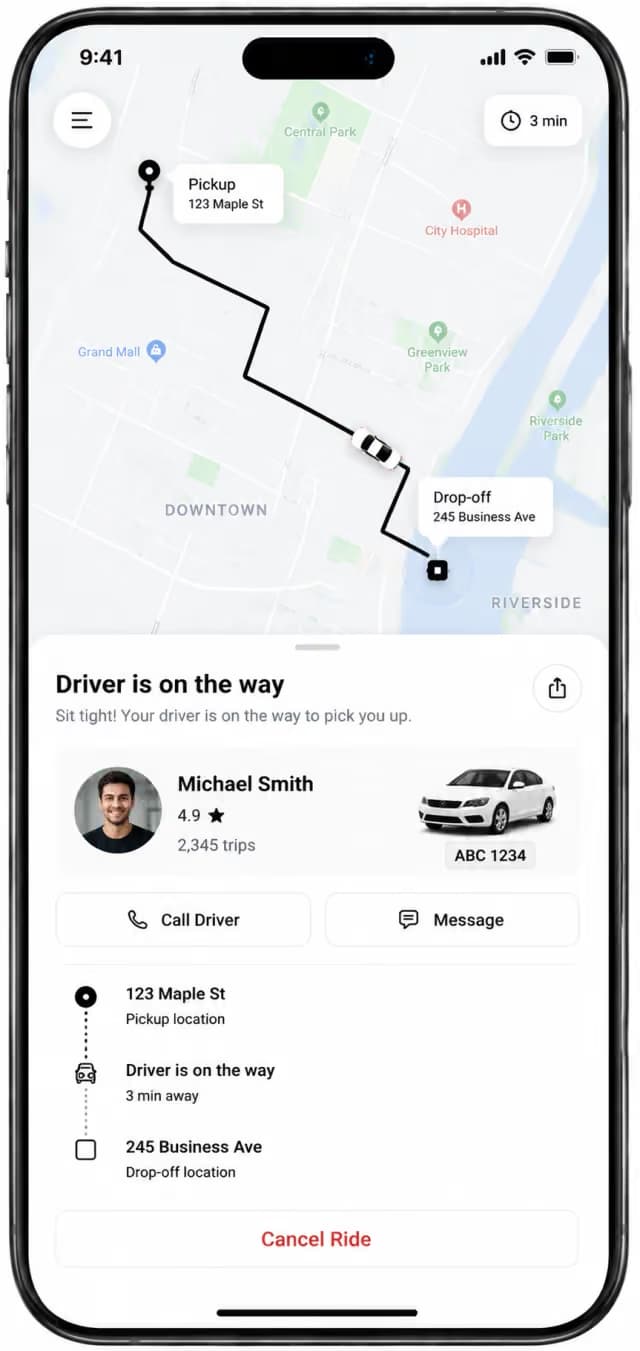
An Uber clone app estimate is a reflection of product scope, not a fixed price for a recognisable app category. A complete budget should include rider and driver applications, the admin system, integrations, configuration, testing and the work required after delivery.
1. Scope the applications and roles
Start by listing every user who needs an account and every task that person must complete. A rider, driver, dispatcher, fleet manager and support agent may use separate interfaces or permissions inside the same platform.
- Rider application or web experience
- Driver application and verification workflow
- Admin panel for users, trips and payments
- Dispatcher or fleet tools, when needed
- Support, reporting and account management
Need a rider app, driver app and admin panel for your business?
Explore the UberClones ride-hailing platform and discuss the modules, branding and workflows required for your market.
Book a live product demo →2. Identify required integrations
Mapping, payments, SMS, push notifications and identity checks can change both initial cost and ongoing expense. Confirm whether the price includes provider accounts, transaction fees, usage limits and integration maintenance.
3. Define regional and operational rules
Different markets require different currencies, fare calculations, document checks, cancellation rules and tax handling. These requirements can be straightforward configuration or substantial product work depending on the base platform.
Key insightA quote is credible only when it names the workflows, integrations and exclusions that determine the actual implementation effort.
4. Compare implementation approaches
A ready-built white-label system may reduce initial development time, while custom engineering provides more control over the architecture. The least expensive option is not always the lowest-cost option if it requires significant rework or has limited ownership rights.
5. Include launch and maintenance costs
- Quality assurance and device testing
- Apple and Google app submission support
- Server, storage and third-party usage charges
- Bug fixes and security updates
- Training and operating documentation
- Future configuration and feature work
Estimate planning checklist
- List all applications and roles
- Describe essential booking and payment workflows
- Identify every external integration
- Confirm ownership and source-code terms
- Separate setup cost from recurring usage
- Allow for testing and post-launch support